Introduction
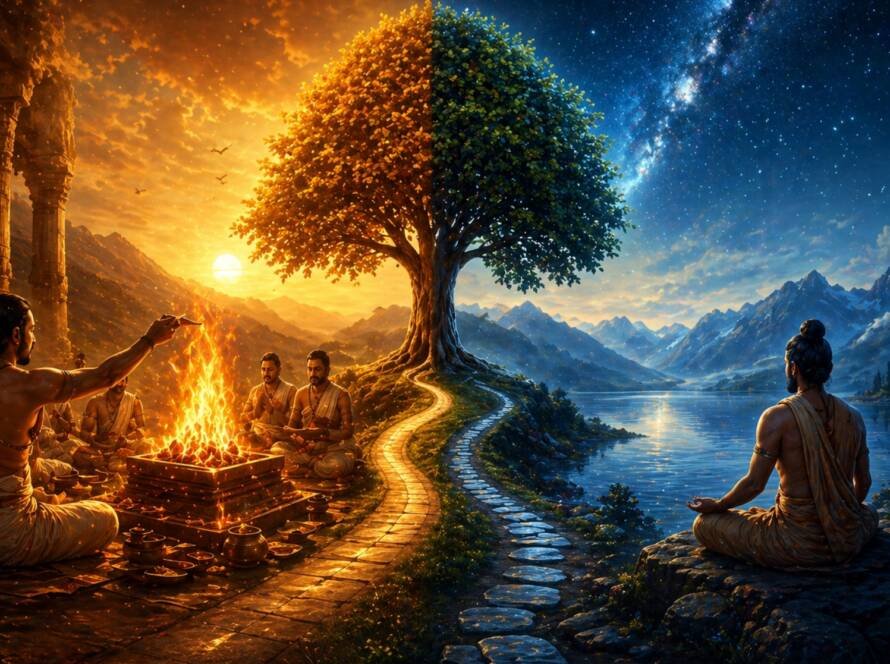
The Vānaprastha Āśrama is the third of the four stages (Āśramas) of life described in the Vedic tradition. It follows Brahmacarya (student life) and Gṛhastha (householder life), and prepares an individual for the final stage of Sannyāsa (renunciation).
The word Vānaprastha literally means “one who has gone to the forest.” However, its deeper meaning extends far beyond physically living in a forest. It represents a conscious transition from a life centered on worldly responsibilities to one focused on spiritual reflection, self-discipline, and inner realization.
Having fulfilled family, social, and professional duties, an individual gradually withdraws from active worldly pursuits—not out of rejection, but to seek higher wisdom and prepare for liberation (Mokṣa).
Thus, Vānaprastha is not an escape from life but a natural evolution toward spiritual maturity.
Meaning of Vānaprastha
The Sanskrit word Vānaprastha is composed of two words:
- Vana — Forest
- Prastha — To proceed or depart
Literally, it means “departing to the forest.”
In ancient India, many individuals entered the forests after completing their responsibilities as householders. Forests offered a peaceful environment free from worldly distractions, making them ideal places for meditation, contemplation, and the study of sacred scriptures.
Over time, Vānaprastha came to symbolize an inner withdrawal from attachment rather than merely a change of physical location.
The Four Āśramas
The Vedic system divides human life into four sequential stages:
- Brahmacarya — The period of education, discipline, and character formation.
- Gṛhastha — The stage of family life, work, service, and social responsibility.
- Vānaprastha — The period of gradual withdrawal, reflection, and spiritual preparation.
- Sannyāsa — Complete renunciation and dedication to the realization of Brahman.
Each stage prepares an individual for the next, ensuring balanced personal, social, and spiritual development.
Why Vānaprastha Was Introduced
The Vedic sages recognized that human life should not remain permanently centered on material achievements.
After years of:
- Raising a family,
- Contributing to society,
- Building wealth,
- And fulfilling worldly duties,
there naturally arises a deeper longing to understand the purpose of life.
Vānaprastha provides the opportunity to redirect one’s energy from external success toward inner growth.
It marks the transition from possessing to understanding, from achievement to wisdom, and from attachment to detachment.
Characteristics of Vānaprastha
The Vānaprastha stage is characterized by gradual transformation rather than sudden renunciation.
The individual begins to:
- Reduce worldly attachments.
- Delegate family responsibilities to the next generation.
- Simplify personal needs.
- Spend more time in contemplation.
- Study the Vedas and Upaniṣads.
- Practice meditation and self-discipline.
- Guide younger generations through experience rather than authority.
This stage encourages balance between continued responsibility and growing spiritual focus.
The Symbolism of the Forest
The forest in Vedic thought carries profound symbolic meaning.
It represents:
- Silence
- Simplicity
- Solitude
- Self-reflection
- Freedom from distraction
- Harmony with nature
Entering the forest symbolizes leaving behind excessive attachment, ambition, and constant worldly activity.
The true forest is ultimately the quiet space within the human mind where wisdom can arise.
Vānaprastha and the Āraṇyakas
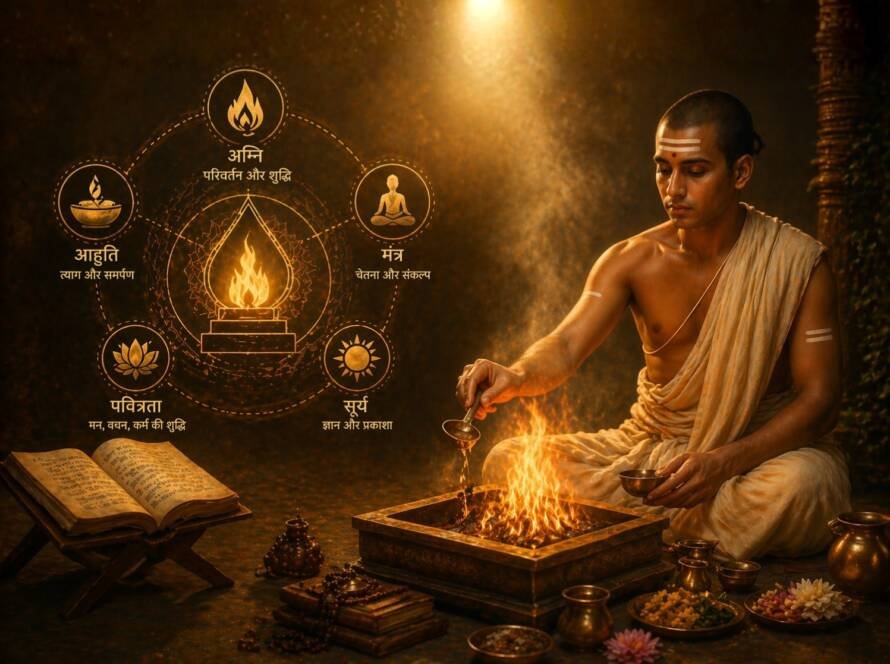
The Āraṇyakas, often called the “Forest Texts,” were traditionally studied during the Vānaprastha stage.
Their teachings encourage seekers to move:
- From ritual to meditation,
- From external worship to inner realization,
- From symbolic sacrifice to self-transformation.
This makes the Āraṇyakas especially suitable for those entering the contemplative phase of life.
Duties During Vānaprastha
Although partially withdrawn from worldly life, a Vānaprasthin does not abandon responsibility.
The duties include:
- Living ethically.
- Practicing self-restraint.
- Teaching and advising younger generations.
- Preserving sacred knowledge.
- Supporting society through wisdom rather than active administration.
- Deepening spiritual practice.
The emphasis shifts from acquisition to contribution.
Spiritual Practices
Common practices associated with Vānaprastha include:
- Meditation
- Study of the Upaniṣads
- Chanting sacred mantras
- Reflection on the Self
- Pilgrimage
- Simplicity of living
- Charity and compassion
- Contemplation of impermanence
These disciplines prepare the mind for the complete renunciation of Sannyāsa.
Vānaprastha in the Modern World
Today, very few people literally retire to forests.
However, the principles of Vānaprastha remain timeless.
Modern Vānaprastha may include:
- Reducing material dependence.
- Mentoring younger generations.
- Spending more time in study and meditation.
- Engaging in community service.
- Living simply.
- Seeking inner peace rather than external success.
It represents a conscious shift in priorities rather than a geographical relocation.
Lessons from Vānaprastha
The Vānaprastha ideal teaches that life is not solely about accumulating wealth, status, or possessions.
Instead, true fulfillment comes from:
- Wisdom
- Self-knowledge
- Inner peace
- Service
- Detachment
- Spiritual realization
It reminds us that every stage of life has its own purpose and that maturity is measured not by age alone, but by the gradual expansion of awareness.
Conclusion
The Vānaprastha Āśrama represents one of the most profound insights of Vedic civilization. It recognizes that after fulfilling worldly responsibilities, the human journey naturally turns inward toward contemplation, wisdom, and spiritual realization.
Rather than rejecting the world, Vānaprastha teaches balanced detachment—continuing to contribute through guidance and experience while gradually freeing the mind from attachment.
Its timeless message is that the second half of life should not merely be a continuation of worldly pursuits, but an opportunity to cultivate wisdom, deepen spiritual awareness, and prepare for the realization of the eternal Self.