Introduction
In the early Vedic period, Yajñas (sacrificial rituals) and sacred ceremonies formed the heart of religious and social life. They were not merely acts of worship but profound expressions of gratitude toward nature, cooperation with the cosmic order (Ṛta), and dedication to Dharma.
However, as Vedic thought evolved, the sages recognized that rituals, when performed without understanding or inner transformation, could become mechanical and lose their spiritual purpose.
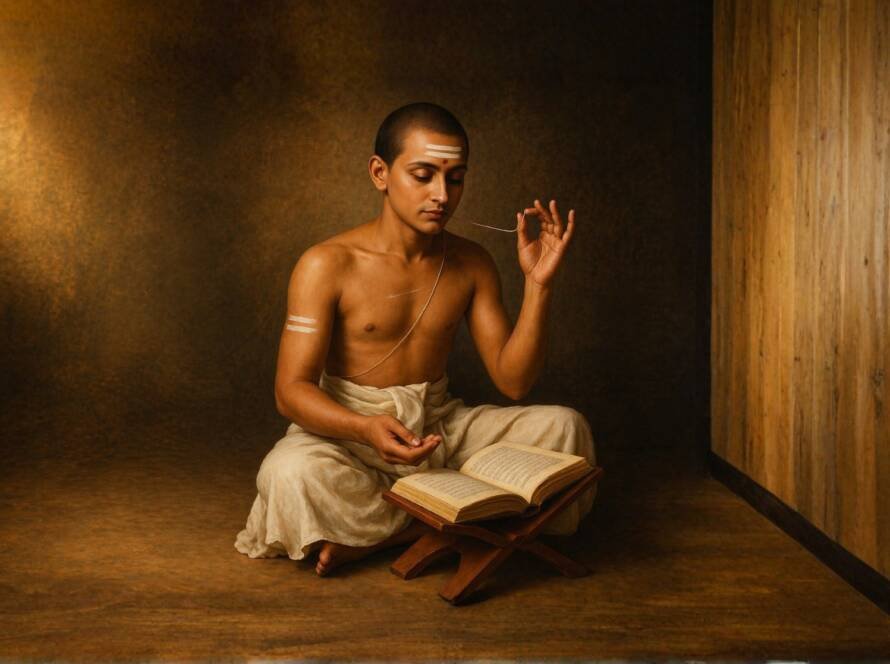
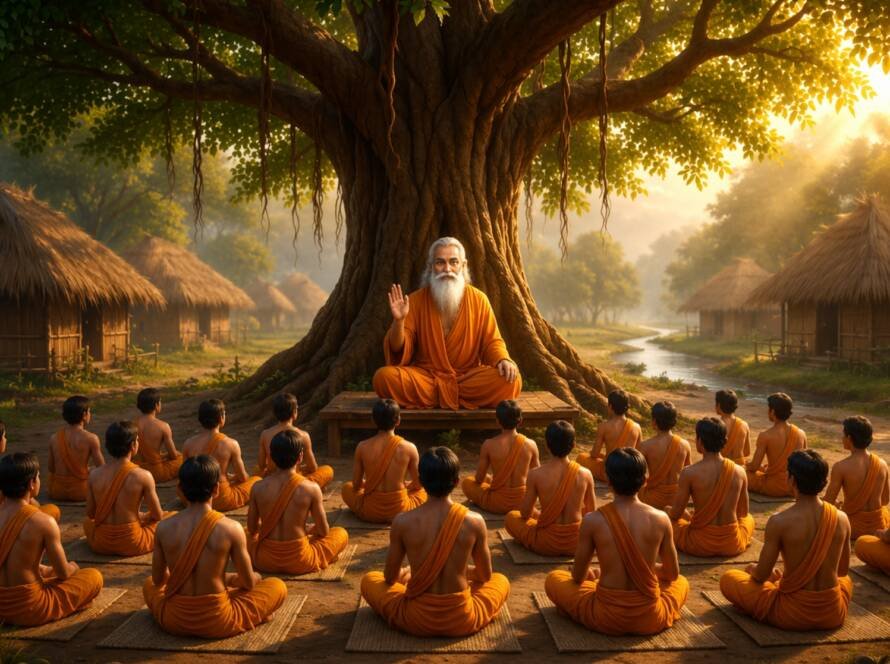
This realization marked one of the most significant developments in Indian philosophy. Gradually, greater emphasis was placed on inner discipline, meditation, self-inquiry, and spiritual knowledge rather than on external ritual alone.
Importantly, this was not a rejection of rituals, but a refinement of their meaning. The Vedic tradition shifted its focus from the outward performance of ceremonies to the inward transformation they were intended to inspire.
The Importance of Rituals in Early Vedic Society
In early Vedic civilization, rituals occupied a central place in both religious and social life.
Through Yajñas, people:
- Expressed gratitude toward the Devas.
- Maintained harmony with nature.
- Strengthened social unity.
- Fulfilled religious duties.
- Participated in the cosmic order.
Rituals were understood as sacred acts that connected human life with the universe and reinforced ethical living.
Why Did This Shift Occur?
As spiritual inquiry deepened, the Vedic sages began asking fundamental questions:
- Can rituals alone lead to liberation (Mokṣa)?
- Is the external act more important than inner intention?
- What is the true purpose of sacrifice?
- Does spiritual realization require something beyond ceremonial worship?
These questions revealed that rituals, although valuable, could not by themselves provide the highest spiritual realization.
The sages realized that without knowledge, devotion, and purity of mind, ritual performance risked becoming a matter of habit rather than a path to wisdom.
The Brāhmaṇas and the Beginning of Reinterpretation
The Brāhmaṇa texts continued to emphasize ritual but also began explaining its philosophical foundations.
Rather than treating Yajñas as mere ceremonies, they explored:
- Their symbolic meanings.
- Their relationship with cosmic order.
- Their spiritual purpose.
- Their role in shaping human character.
This marked the beginning of a deeper understanding of ritual.
The Āraṇyakas: From Ritual to Contemplation
The Āraṇyakas carried this transformation further.
They interpreted rituals symbolically rather than literally.
For example:
- Fire became the fire of knowledge.
- The altar became the human heart.
- Offerings became the surrender of ego.
- Sacrifice became inner purification.
The emphasis gradually shifted from performing rituals to understanding their spiritual significance.
The Upaniṣads and the Rise of Inner Knowledge
The Upaniṣads completed this philosophical transformation.
Their primary concern was no longer:
“How should rituals be performed?”
Instead, they asked:
- Who am I?
- What is the nature of the Self (Ātman)?
- What is Brahman?
- What is the ultimate reality?
The Upaniṣads taught that liberation comes through Self-knowledge, not through ritual performance alone.
External ceremonies became secondary to direct spiritual realization.
Ritual Was Refined, Not Rejected
It is important to understand that the Vedic sages did not reject rituals.
Instead, they clarified their proper role.
Rituals were understood as:
- Means rather than the final goal.
- Preparations for higher knowledge.
- Disciplines that purify the mind.
- Symbolic expressions of deeper truths.
A ritual performed with understanding became spiritually meaningful, while one performed mechanically lost much of its value.
Thus, the focus shifted from the ceremony itself to the transformation of the individual.
The Internalization of Yajña
As Vedic philosophy matured, the meaning of Yajña expanded dramatically.
True sacrifice came to signify:
- Surrender of ego.
- Control of the senses.
- Purification of the mind.
- Selfless service.
- Compassion.
- Pursuit of wisdom.
The external sacred fire came to symbolize the inner fire of knowledge.
The highest sacrifice was no longer the offering of material substances but the offering of ignorance, attachment, and selfishness into the fire of spiritual insight.
The Bhagavad Gītā: A Harmonious Synthesis
The Bhagavad Gītā presents one of the most balanced interpretations of this evolution.
Lord Kṛṣṇa neither dismisses ritual nor elevates it above all else.
Instead, He teaches that:
- Actions should be performed selflessly.
- Knowledge should guide action.
- Devotion should purify both.
- Every righteous action can become a Yajña when dedicated to the Divine.
The Gītā also praises Jñāna Yajña (the sacrifice of knowledge) as one of the highest forms of sacrifice because it destroys ignorance—the root cause of bondage.
Thus, the Gītā unites ritual, action, devotion, and knowledge into a single path of spiritual growth.
Influence on Indian Spiritual Thought
The gradual movement away from ritual dominance profoundly shaped the future of Indian philosophy.
It laid the foundation for:
- The Upaniṣads
- Vedānta
- Yoga
- Meditation traditions
- Various schools of spiritual inquiry
The center of spiritual life shifted from external ceremonies to the transformation of consciousness.
Relevance in the Modern World
This evolution remains deeply relevant today.
Many people continue to practice rituals as expressions of faith and cultural identity.
The Vedic tradition reminds us, however, that the value of any ritual depends upon:
- Understanding,
- Sincerity,
- Awareness,
- Devotion,
- And inner transformation.
A simple act performed with mindfulness and selflessness may possess greater spiritual significance than an elaborate ceremony performed without understanding.
The true purpose of every ritual is to awaken wisdom, cultivate compassion, and bring the individual closer to the Divine.
Conclusion
The decline of external ritual dominance was not a decline of Vedic spirituality but a sign of its philosophical maturity. The sages recognized that while rituals play an important role in purifying the mind and preserving sacred tradition, they are ultimately means to a higher end.
Their true purpose is to prepare the seeker for self-inquiry, meditation, and the realization of the Self.
The enduring message of this evolution is that rituals attain their highest value only when they inspire inner transformation. When outward worship is united with wisdom, devotion, and self-awareness, it becomes a genuine path to spiritual freedom and the realization of Brahman.